How do you build a catering production schedule when three events land on the same weekend?
Three events in one weekend fail on capacity and timing, not on cooking. Here is how to build a single backward planned schedule, one shared pull list, and a change cutoff that actually holds.
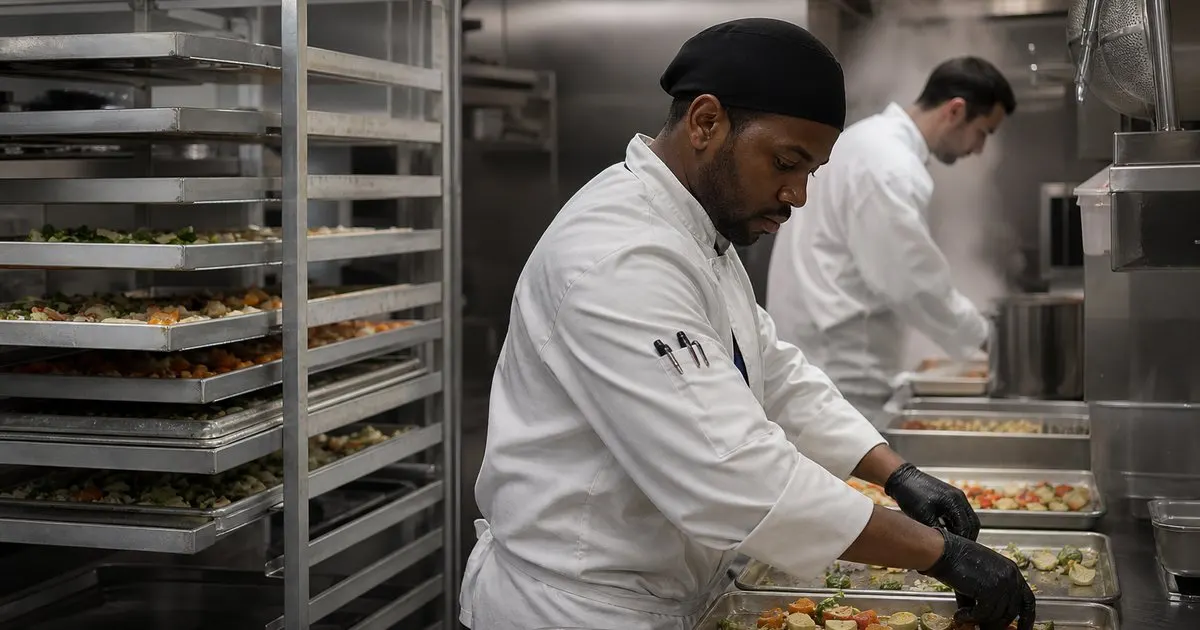
Write the service times first and plan backward
The only fixed points in a catering weekend are the moments food hits the table. Everything else is negotiable, so put the three service times at the top of one page and work backward for each event: doors open, staff call, truck departure, load out, final plating, hot hold start, cook, prep, receiving. Building forward from Friday morning feels natural and hides every conflict until Saturday afternoon, when nothing can be moved anymore. Related: From Inquiry to Booked Catering Event
Backward planning also surfaces a number worth writing down: the latest hour each event can still absorb a mistake. If Saturday's plated dinner leaves the kitchen at 3:30 and the drive is 45 minutes, your real cutoff for a failed protein is closer to noon, because a refire needs cook time plus rest plus pack. Mark that hour in a different color and treat it as a hard deadline the whole team can see. Related: How many servers does a plated dinner for 150 guests actually need?
Keep reading: From Inquiry to Booked Catering Event, Writing a Catering Proposal That Wins, What a Banquet Event Order Needs. See how CaterLoom helps you catering proposals and banquet event order generator.
Consolidate three prep lists into one weekend pull list
Three banquet event orders usually turn into three prep lists, three orders to the supplier, and three cooks trimming the same case of carrots at different hours. Combine them instead. Build one ingredient list for the weekend with a column per event, so the person receiving knows the total quantity to expect and the person prepping knows how to split it. Batch the shared components once (stock, vinaigrette, mirepoix, brined chicken) and portion them into labeled event pans right after.
Consolidation is where most of the labor savings live, but it adds one risk: a shared batch that fails takes down all three events at once. Keep allergen sensitive and dietary specific items out of shared batches entirely and produce them separately, ideally by one named person. Anything a guest with a serious allergy will eat should have its own pan, its own utensils, and its own line on the schedule, never a portion scooped from a communal hotel pan. Related: Which rentals should a caterer include in the proposal versus leave to the client?
Schedule against real oven, cooler, and truck capacity
A production schedule that ignores equipment is a wish list. Count what you actually have: oven decks or combi racks, cooler shelves, hotboxes, sheet pan racks, and how many pans fit in the van in a single trip. Then lay all three events onto that capacity hour by hour. Most weekend collisions are not staffing collisions, they are one oven that two events need between 1 and 3 on Saturday, or a walk-in that cannot hold Sunday's mise while Saturday's finished trays wait to load.
When capacity does not fit, you have four usual moves: shift a prep task earlier in the week, swap a menu item for something that holds or reheats better, rent or borrow a second hotbox, or split the truck into two trips with a driver you have confirmed by name. Make that call on Wednesday. Making it at 2pm Saturday costs you a rental nobody can source and a menu change the client never agreed to.
Freeze the plan, then route every change through the BEO
Pick a cutoff, commonly around 72 hours out, and tell clients plainly that counts and menu lock then. The point is not rigidity. It is that after the cutoff the kitchen buys, preps, and staffs against a fixed document. A late add of ten guests is easy when the schedule and the order can still absorb it. The same add on Friday afternoon sends someone to a supplier and pushes the timeline for all three events, not just the one that changed.
When a change does arrive after the freeze, update the banquet event order first and let the production schedule follow it. If the chef hears the new vegan count in a text message and the captain hears it on a phone call, you now have two versions of the truth in a weekend that cannot afford one. That single failure is why we built CaterLoom the way we did: the count changes in one place, and the BEO, the prep sheet, and the invoice move with it. Related: What a Banquet Event Order Needs
- Put the three service times on one page and plan backward, then mark the latest hour each event can still recover from a mistake.
- Merge the events into a single weekend pull list with a column per event rather than three separate prep sheets.
- Keep allergen and dietary items out of shared batches, with their own pans, utensils, and one named owner.
- Lay the schedule over real oven, cooler, and truck capacity, and solve collisions midweek instead of on the day.

Julien Jimenez
Julien Jimenez is an independent software builder based in Paris. He designs, ships, and operates focused SaaS products for small businesses and independent professionals. Read the full author page.
From proposal to banquet order in one flow
Catering proposals and banquet event order generator. CaterLoom is built to help you put this into practice.
Build a proposalMore from the CaterLoom blog
From Inquiry to Booked Catering Event
Writing a Catering Proposal That Wins
What a Banquet Event Order Needs
Get the CaterLoom playbook
Practical guides on catering operations, straight to your inbox as we publish them. No spam, unsubscribe any time.