What should a caterer do with leftover food when the event ends and guests want to take it home?
Guests ask, captains improvise, and the caterer carries the risk. A written policy, an honest food safety line, and one field on the BEO settle the question before breakdown starts.
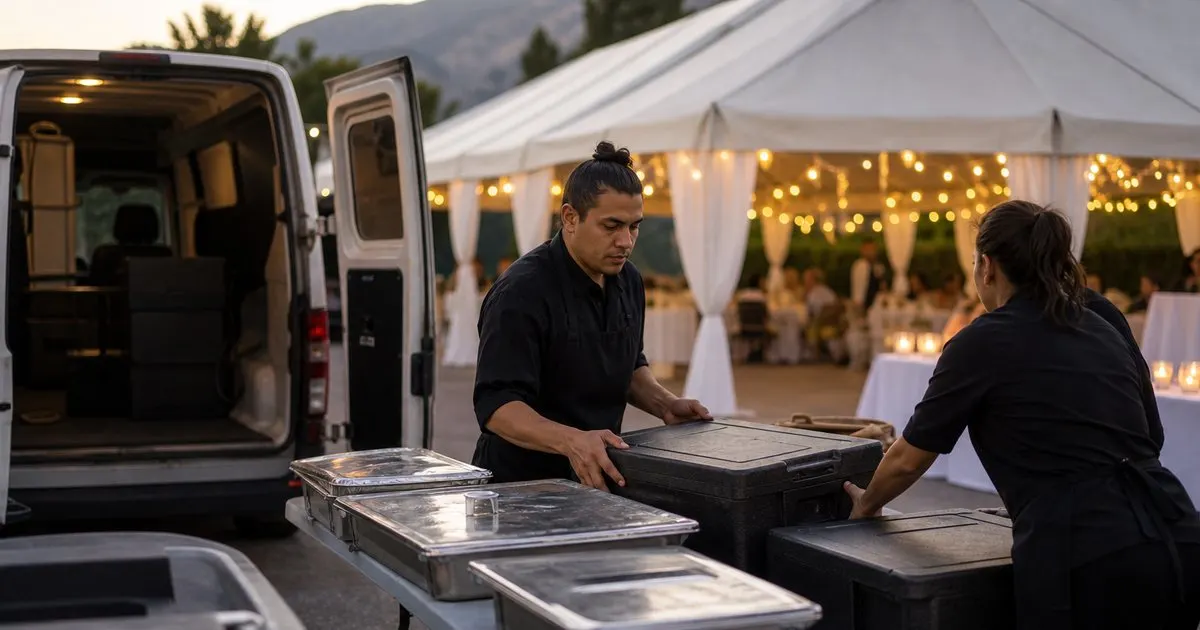
Decide the policy before the truck is loaded
The question always lands at the worst moment. The last table is cleared, the host's aunt is holding an empty foil pan, and your captain has ten seconds to make a liability decision in the middle of breakdown. Decide it in the office instead. Most caterers settle on one of three positions: nothing leaves with guests, only untouched product that never reached service leaves in your packaging, or the client may take a defined portion after acknowledging the handoff in writing.
Whichever position you pick, the reason to write it down is consistency. A captain who says yes at one wedding and no at the next creates a story that travels, and it usually reaches the venue coordinator before it reaches you. Put the policy in the proposal, repeat it on the banquet event order, and give your captains one clean sentence they can say out loud without calling anyone for permission. Related: What a Banquet Event Order Needs
Keep reading: From Inquiry to Booked Catering Event, Writing a Catering Proposal That Wins, What a Banquet Event Order Needs. See how CaterLoom helps you catering proposals and banquet event order generator.
Draw the line where food safety actually draws it
The practical line is not about generosity, it is about the cold chain. Standard food safety guidance treats the temperature range roughly between 41 and 135 degrees as the window where bacteria multiply, and your local health department sets the rule that actually governs your operation. Food that sat on a buffet through a long reception has already spent much of its safe window on the line. Handing that pan to a guest who then drives home with it warm in a trunk is where the real risk sits. Related: Why does food temperature control get harder during off-site catering transport?
A defensible split is simple. Back of house product that was never put out, was held at temperature, and can be packed cold may reasonably go to the client. Anything that reached a buffet, a passed tray, or a guest table stays with you and gets discarded. Many caterers add a second condition worth copying: the client needs a cooler or on-site refrigeration, because handing over chicken that will ride around for two hours defeats the entire point of the policy. Related: How many servers does a plated dinner for 150 guests actually need?
Treat donation as a plan, not a last minute idea
Food recovery organizations operate in most metro areas and many will accept safely held surplus. What none of them will do is appear at 11pm on a Saturday because you called during breakdown. Donation works when it is arranged weeks ahead: a named partner, agreed pickup or drop-off windows, containers you already stock, and a temperature log that one person is responsible for completing. Some partners want food chilled and delivered rather than collected, which is a staffing decision you should price, not an afterthought.
It is also worth understanding the legal ground rather than guessing at it. Good faith food donation protections exist at the federal level and in state law across the United States, and they are designed to shield donors who give apparently wholesome food in good faith, but the specifics vary and your insurance carrier may have conditions of its own. Ask your attorney and your carrier once, write the answer into your operating notes, and stop relitigating it on the loading dock every weekend.
Put it on the BEO and say it during the pre-event briefing
The leftover conversation only goes badly when it is a surprise. Add a leftovers line to the banquet event order with three possible values (none released, client packs untouched product, donation partner scheduled), and have the captain read it back to the client contact during the pre-event briefing. Ninety seconds at the start of the night prevents a negotiation at the end of it, when everyone is tired and the client feels like they are being told no in front of their guests. Related: What should a caterer check during a venue walkthrough before the event?
There is a quieter benefit to recording it. The amount you pack out is data. If you are consistently sending back three pans of the same side dish, your yields or your guest counts are off, and the fix belongs upstream in the proposal rather than in the parking lot. We added the leftovers field to the BEO in CaterLoom for the liability reason, and for a lot of kitchens the pattern it exposed turned out to be the more useful half.
- Choose one leftover policy, publish it in the proposal and the BEO, and apply it identically at every single event.
- Never release food that reached a buffet, a passed tray, or a guest table, no matter who asks.
- Set up donation partners weeks ahead with agreed windows, containers, and a temperature log someone owns.
- Track what you pack out, because repeated surplus of the same dish points to a yield or headcount problem upstream.

Julien Jimenez
Julien Jimenez is an independent software builder based in Paris. He designs, ships, and operates focused SaaS products for small businesses and independent professionals. Read the full author page.
From proposal to banquet order in one flow
Catering proposals and banquet event order generator. CaterLoom is built to help you put this into practice.
Build a proposalMore from the CaterLoom blog

From Inquiry to Booked Catering Event

Writing a Catering Proposal That Wins
What a Banquet Event Order Needs
Get the CaterLoom playbook
Practical guides on catering operations, straight to your inbox as we publish them. No spam, unsubscribe any time.