What should a caterer check during a venue walkthrough before the event?
A thirty-minute walkthrough prevents most day-of disasters. Here is what to look at, who to bring, and how to turn what you find into BEO instructions.
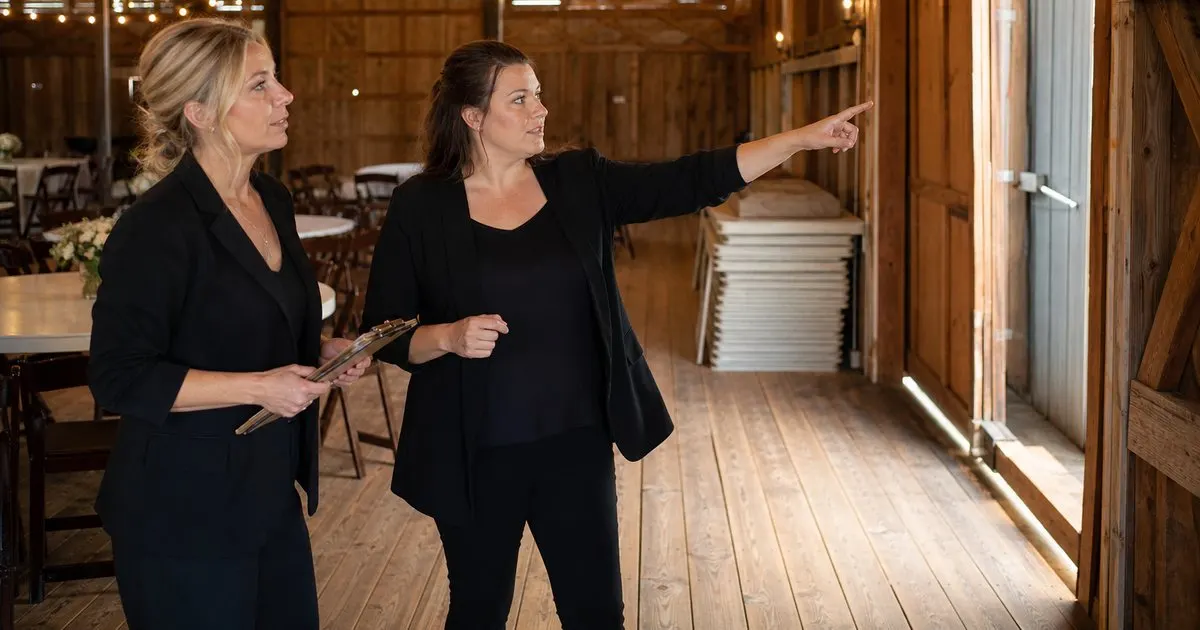
Load-in, access, and the path your food will travel
Start outside. Where does the truck park, how far is it from the door, and is that route flat, paved, and covered? A hundred feet of gravel between the van and the kitchen changes how you pack, how many hand trucks you bring, and how long load-in takes. Ask about time restrictions on the loading area, whether other vendors share it, and whether there is a freight elevator or only a passenger one with size limits. Note the width of the narrowest door on the route; hot boxes and speed racks have been left on sidewalks over an inch.
Then walk the exact path a plate will take from the prep area to the farthest guest table. Count the steps, note stairs, thresholds, tight turns, and any spot where a server carrying a tray will cross guest traffic or a dance floor. The distance and obstacles determine how many runners you need, whether you stage a secondary service point, and how long a plated course will realistically take. Write these numbers down; they belong in the staffing section of your BEO, not in someone's memory. Related: How many servers does a plated dinner for 150 guests actually need?
Keep reading: From Inquiry to Booked Catering Event, Writing a Catering Proposal That Wins, What a Banquet Event Order Needs. See how CaterLoom helps you catering proposals and banquet event order generator.
The kitchen, or the space pretending to be one
Many venues advertise a "catering kitchen" that turns out to be a prep sink, a residential refrigerator, and an outlet. Confirm what is actually there: refrigeration capacity and temperature, oven type and count, burners, hot water, a three-compartment or at least a usable sink, ice machine, and dumpster access. Test the outlets you plan to use and ask which ones share a circuit. Two hot boxes and a coffee urn on the same breaker is a classic way to lose power in the middle of service. Related: Coordinating Kitchen and Service
If the kitchen is inadequate, decide now what you are bringing: portable induction, propane and whether the venue allows it, a refrigerated truck, extra hot boxes, or a fully cooked-and-held menu that needs no finishing. Each of those choices affects the menu you can safely execute and the price, and both belong in the proposal before the client signs, not as a surprise the week before. Photograph everything so your chef can plan without a second trip.
Service, rentals, and the room itself
Confirm what the venue provides versus what you or a rental company must bring: tables, chairs, linens, glassware, bar setup, trash cans and liners, and the coffee station. Ask who is responsible for setting and breaking down each item and by what time. Look at where the bar will sit relative to the kitchen and to the guest flow, and where a buffet or stations can go without creating a line that blocks the entrance. Check the room dimensions against the floor plan you were sent; venue diagrams are often optimistic. Related: Which rentals should a caterer include in the proposal versus leave to the client?
Ask about rules that shape service: noise curfews, open flame and sterno policies, restrictions on where food can be served, whether guests can bring alcohol, and whether the venue requires you to use their staff for any function. Find out the hard end time for vendors, not just for guests, since breakdown and cleaning are often on your clock. Learn the trash and recycling policy; some venues charge for removal, others require you to haul everything out.
Turning the walkthrough into instructions
A walkthrough is only useful if it changes documents. Within a day, update the proposal or BEO with anything that affects scope or cost: added rentals, a refrigerated truck, extra staff for a long carry, or a menu adjustment because the venue forbids open flame. Attach a simple site diagram with the truck position, load-in door, kitchen, bar, and service paths marked. Your event lead should be able to arrive at a venue they have never seen and set up from that page. Related: Managing Headcount and Menu Changes
Keep a venue file. Every walkthrough you do is reusable the next time a client books the same space, and repeat venues are where caterers make the easiest money. Record the contact, the quirks (the breaker that trips, the door that sticks, the neighbor who complains about trucks), and the timing that worked. Over a few years, that file becomes an operational asset worth more than most marketing.
- Walk the physical route from truck to farthest table and write down distances, doors, and obstacles.
- Verify the kitchen in person and decide what equipment you must bring before the client signs.
- Confirm venue rules, vendor end times, and who owns setup, breakdown, and trash.
- Update the BEO and a site diagram within a day, and keep a reusable venue file.

Julien Jimenez
Julien Jimenez is an independent software builder based in Paris. He designs, ships, and operates focused SaaS products for small businesses and independent professionals. Read the full author page.
From proposal to banquet order in one flow
Catering proposals and banquet event order generator. CaterLoom is built to help you put this into practice.
Build a proposalMore from the CaterLoom blog
From Inquiry to Booked Catering Event

Writing a Catering Proposal That Wins
What a Banquet Event Order Needs
Get the CaterLoom playbook
Practical guides on catering operations, straight to your inbox as we publish them. No spam, unsubscribe any time.