Which rentals should a caterer include in the proposal versus leave to the client?
Rentals can be a service, a margin line, or a liability, depending on how you handle them. Here is how to decide what to own, how to present it, and how to keep it off your damage bill.
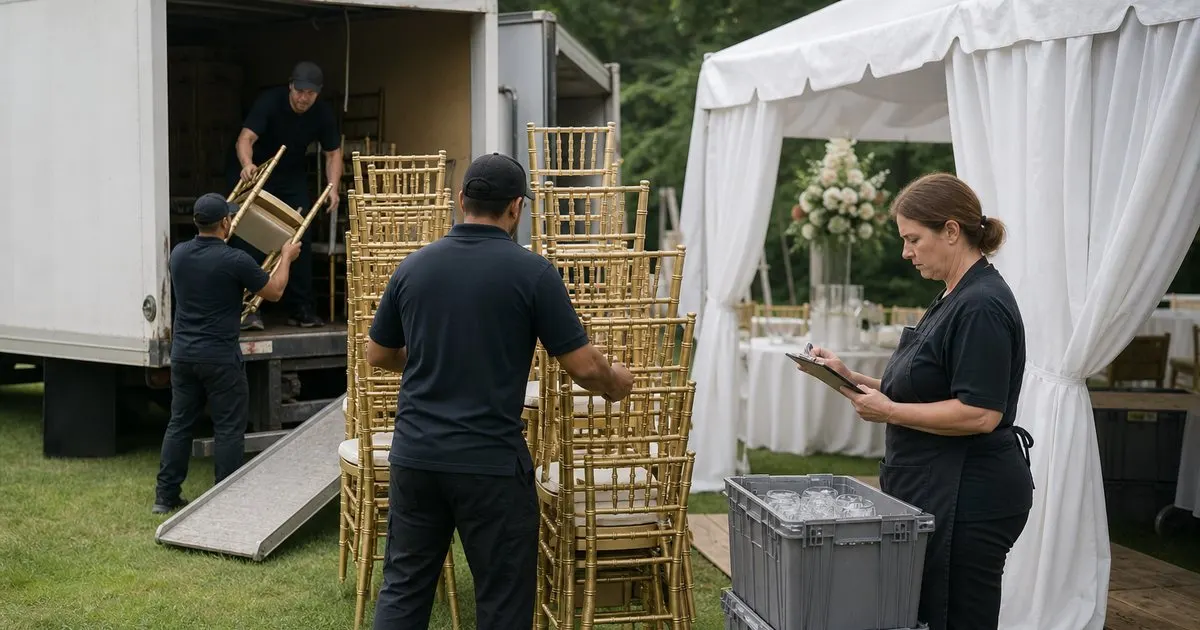
Three ways to handle rentals, and what each one costs you
Caterers generally take one of three positions on rentals. The first is to include them: you source the china, glassware, flatware, linens, and service equipment, put them on your proposal, and take responsibility for the order. The second is to coordinate but not bill: you specify what is needed and the client contracts directly with the rental company. The third is to stay out of it entirely and serve on whatever the client or venue provides. Each is legitimate, and many caterers use different positions for different event types. Related: What a Banquet Event Order Needs
Including rentals gives you control over what your food is served on and a margin opportunity, but also puts damage, shortages, and late deliveries on your account. Coordinating without billing keeps liability with the client but leaves you dependent on an order you do not control, which is where the mysterious missing water goblets come from. Staying out entirely is simplest but only works when the venue is fully equipped or the event is casual enough not to care. Related: What should a caterer check during a venue walkthrough before the event?
Keep reading: From Inquiry to Booked Catering Event, Writing a Catering Proposal That Wins, What a Banquet Event Order Needs. See how CaterLoom helps you catering proposals and banquet event order generator.
What belongs on your proposal regardless
Whatever you decide about guest-facing rentals, the equipment your team needs to execute the food should be on your proposal and under your control. That means hot boxes, chafers, sternos, service platters, bus tubs, prep tables, and the kitchen tent if you are cooking outdoors. Leaving these to the client is asking for a rental order that omits them, and the day-of scramble is your problem, not theirs. Price them as part of your service or as a clearly labeled equipment line. Related: Coordinating Kitchen and Service
Anything that affects food safety or your ability to serve on time falls in the same category: refrigerated trucks, portable hand-wash stations where required by the local health department, generators for outdoor power, and lighting for a kitchen tent after dark. These items are easy to forget on a rental list written by someone who has never worked a tent wedding at ten at night. If you need it to do the job, own the line.
Presenting rentals so clients understand the cost
If you include guest-facing rentals, show them as their own section on the proposal with quantities, not buried in a per-person price. Clients rarely understand why a plated dinner costs what it does until they see that each guest needs a charger, a dinner plate, a salad plate, a bread plate, three glasses, and a set of flatware, and that all of that needs to be delivered, counted, washed, and picked up. Transparency here also protects you when they ask why a buffet is cheaper.
Be clear about what your rental price covers. Many caterers add a coordination or handling charge for managing the order, which is reasonable given the hours involved, but it should be disclosed rather than hidden inside marked-up unit prices. State the delivery and pickup windows, whether the client or venue must be present, and what happens to items the client's guests break. Spell out who signs for the delivery and who counts the return, because rental disputes are almost always about counts.
Keeping damage and loss off your invoice
If rentals are on your account, the damage waiver offered by the rental company is usually worth taking, and the cost should be passed through on your proposal. Even with a waiver, count everything at delivery and at pickup, photograph any damage the moment you see it, and keep the signed delivery tickets. A dozen missing wine glasses at the end of a wedding are almost never your staff's fault, but without a count you will pay for them.
Write a clear clause in your agreement for client-caused loss and damage, and mirror it in the rental section of the BEO so your event lead knows what to document. Give the client a copy of the rental order with quantities before the event so there is a shared reference. When your proposal, BEO, and rental list all come from the same source, the counts match and the conversation after the event is short. Related: How much of a deposit should a caterer collect before locking a date?
- Decide per event type whether you include, coordinate, or stay out of guest-facing rentals.
- Always own the equipment needed to execute and safely serve the food.
- Show rentals as itemized quantities with a disclosed handling charge, not a hidden markup.
- Count at delivery and pickup, take the damage waiver, and document loss on the BEO.

Julien Jimenez
Julien Jimenez is an independent software builder based in Paris. He designs, ships, and operates focused SaaS products for small businesses and independent professionals. Read the full author page.
From proposal to banquet order in one flow
Catering proposals and banquet event order generator. CaterLoom is built to help you put this into practice.
Build a proposalMore from the CaterLoom blog
From Inquiry to Booked Catering Event

Writing a Catering Proposal That Wins

What a Banquet Event Order Needs
Get the CaterLoom playbook
Practical guides on catering operations, straight to your inbox as we publish them. No spam, unsubscribe any time.